Toronto's no-heat complaints arrive with the first night below 7°C
Toronto heating season data: in four autumns, 311 no-heat requests ran five to seventeen times busier the week of the first night below 7°C.
Published: 2026-10-17 · Author: Ahmed Heshmat · 6 min read
On Thanksgiving Monday 2023, the City of Toronto logged 64 requests about inadequate heat in rental units, more than on any other day that autumn. The heating bylaw had been in force since September 15. The overnight low at Pearson that day was 6.7°C, the first below 7°C since the rule started. Four nights earlier it had been 17°C.
In each of the last four Toronto heating seasons, requests to 311 sat at a few a day until the first night below 7°C after the heating rule took effect. The week that started with that night ran at five to seventeen times the daily rate of the week before. So the date in the bylaw is when the city will act on a complaint, and the forecast is when tenants start making them. If you run after-hours maintenance calls for a Toronto portfolio, the forecast is the one to plan the phones around.
Four autumns: the week after the first night below 7°C
The brass bars are the week that began with the first night below 7°C after the rule started.
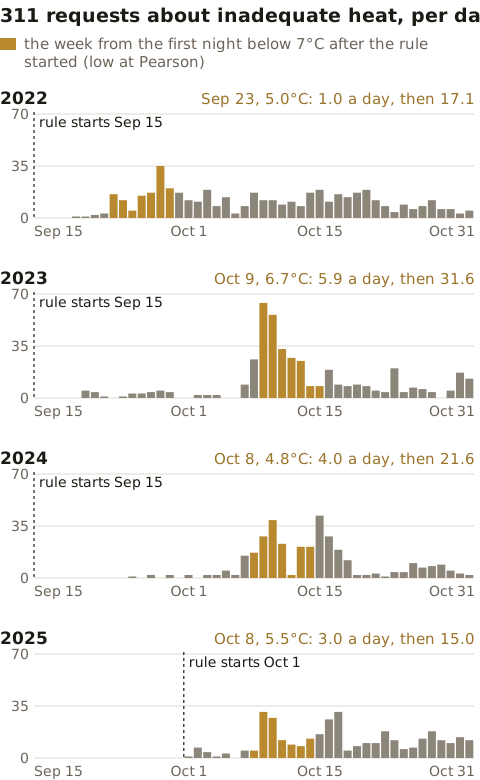
In 2022 the cold came early. Under the old September 15 start, the first night below 7°C was September 23, and requests went from about one a day to 17. In 2023, 2024 and 2025 it came on October 9, 8 and 8, and requests went from between three and six a day to between 15 and 32. In 2023 and 2024 the climb began a day or two before the line was crossed, so treat 7°C as the leading edge of the first cold snap and be ready a day early.
Three of those four weeks also held Thanksgiving Monday. That is partly the calendar: the holiday always falls between October 8 and 14. 2022 is the check on it: its cold night came 17 days before the holiday and requests jumped anyway. The holiday matters for the phones all the same. The busiest day of the autumn was the Monday itself in 2023 and the Tuesday after it in 2024.
Since 2025, a cold September night falls outside the bylaw
Toronto's minimum is 21°C in every part of a rental unit whose heat the landlord pays for. Until 2025 it applied from September 15 to June 1. Council moved it to October 1 to May 15, in force from April 30, 2025, after a November 2024 staff report on indoor temperatures in the shoulder seasons. In June 2026 the chapter was renamed the Indoor Temperature Standards bylaw.
The province draws the line earlier. Under the Residential Tenancies Act and its general regulation, heat is a vital service from September 1 to June 15, and a landlord may not withhold one it is obliged to supply. The same staff report says the city cannot enforce the heating bylaw outside its dates.
In September 2023, under the old start, the coldest night after the rule began was 7.1°C and the city still filed 30 inadequate-heat requests. In September 2026, with lows of 7.4°C on the 22nd and 7.0°C on the 25th, it filed none. A tenant who is cold in late September has one place to call that can do anything about it that night, and it is the landlord.
A switchover takes longer than a cold snap gives you
The staff report explains why a landlord cannot simply react to the forecast. Building heating systems, it says, "require several days and multiple visits by technicians to switchover", and not every building has the same system. By the city's figures the gap between a September day's high and low averages 13°C, so the same building can want cooling in the afternoon and heat before dawn.
A building with installed air conditioning has to keep units at 26°C or less until September 30 and at 21°C or more from October 1. There is no day between the two, and the switchover the city describes takes several. In 2026 the first night below 7°C came on October 5, four days in.
What a city-wide chart tells one portfolio
The city tells a tenant with no heat to call the landlord first, and to call 311 if the landlord has not responded within 24 hours. A tenant who follows that advice only reaches the chart after the landlord's office has had a day to answer and has not.
The chart shows when the risk opens, and the first cold night is not always the worst of it. In 2022 and 2025 the busiest week of the autumn came in November: 141 requests in the week from November 15, 2022, and 159 in the week from November 8, 2025.
On the property management line we run for a Toronto operation, the cold week of October 5 to 11 brought 90 calls and not one about heat. That is one portfolio, in a year when the cold came early in the month, and the call reports cannot tell us whether its buildings had already switched over or its tenants simply waited. The city has not yet published its October numbers to compare.
The first-cold-night plan
This year's first cold night has passed. Steps 3 to 5 still apply to the November weeks ahead; steps 1, 2 and 6 are for next September.
- Plan the phones around the first night below about 7°C. From 2022 to 2026 it came between September 23 and October 9. Watch the forecast low from mid-September and be ready a day early.
- Book the switchover against those dates. The forecast will not warn you far enough ahead for a job the city says takes several days. In a building with installed air conditioning the 26°C ceiling still runs to September 30, so check the forecast highs before the cooling goes off.
- Confirm the on-call heating contractor for the weeks after it, by name and number, and check whether a holiday falls in them.
- Tell tenants the plan before they ask: the date the heat goes on, who to call if a unit is cold, and what happens after hours.
- Write the heat call into the after-hours script. The agent or answering service asks for the temperature and where it was taken (the bylaw measures 1.5 metres above the floor), whether it is one room, the whole unit or several units, and whether anyone in the unit is at higher risk from cold. No heat at all, or more than one unit affected, wakes someone: from October 1 at the latest, and from September 1 if step 6 says so. One cool room becomes a morning work order with a time attached. Our after-hours triage rules set out the rest of that list.
- Decide the September answer. A tenant who calls on a 7°C night in late September is calling inside the province's vital service window and outside the city's. Write down what your office will do, so whoever answers the phone, person or agent, says the same thing.
A heating contractor's dispatcher gets the same week from the other side: any switchover a landlord leaves until the first cold night lands in the same few days as the no-heat calls, and in three of the last four years those days ran over the Thanksgiving long weekend. Our HVAC page sets out what we would put on a Toronto shop's phones for it.
How we counted
Requests: the City of Toronto's open data set "311 Service Requests, Customer Initiated", service request type "Adequate Heat", counted by creation date. The 2026 file runs to September 30. A request is not a unit, and one building can generate several. Weather: Environment and Climate Change Canada's daily data for Toronto Pearson (station Toronto Intl A). For each year we found the first night below 7°C on or after the date the heating rule took effect, and compared the seven days starting that night with the seven days before it. Seven is an approximate line, not a law: we tried 6°C and 8°C as well, and only 7°C held in all four years. At 6°C the 2023 jump had already started, and at 8°C a mild September night in 2023 brought no jump at all. The daily counts and lows are published with this post. The rules were read on October 14, 2026 in the bylaw text, the city's indoor temperatures page and the November 2024 staff report to council. Our own line's count comes from the call reports it posts after every call, read without caller details. This is operating guidance, not legal advice.